TPO Roof Leak Tracked Down and Fixed in Dallas
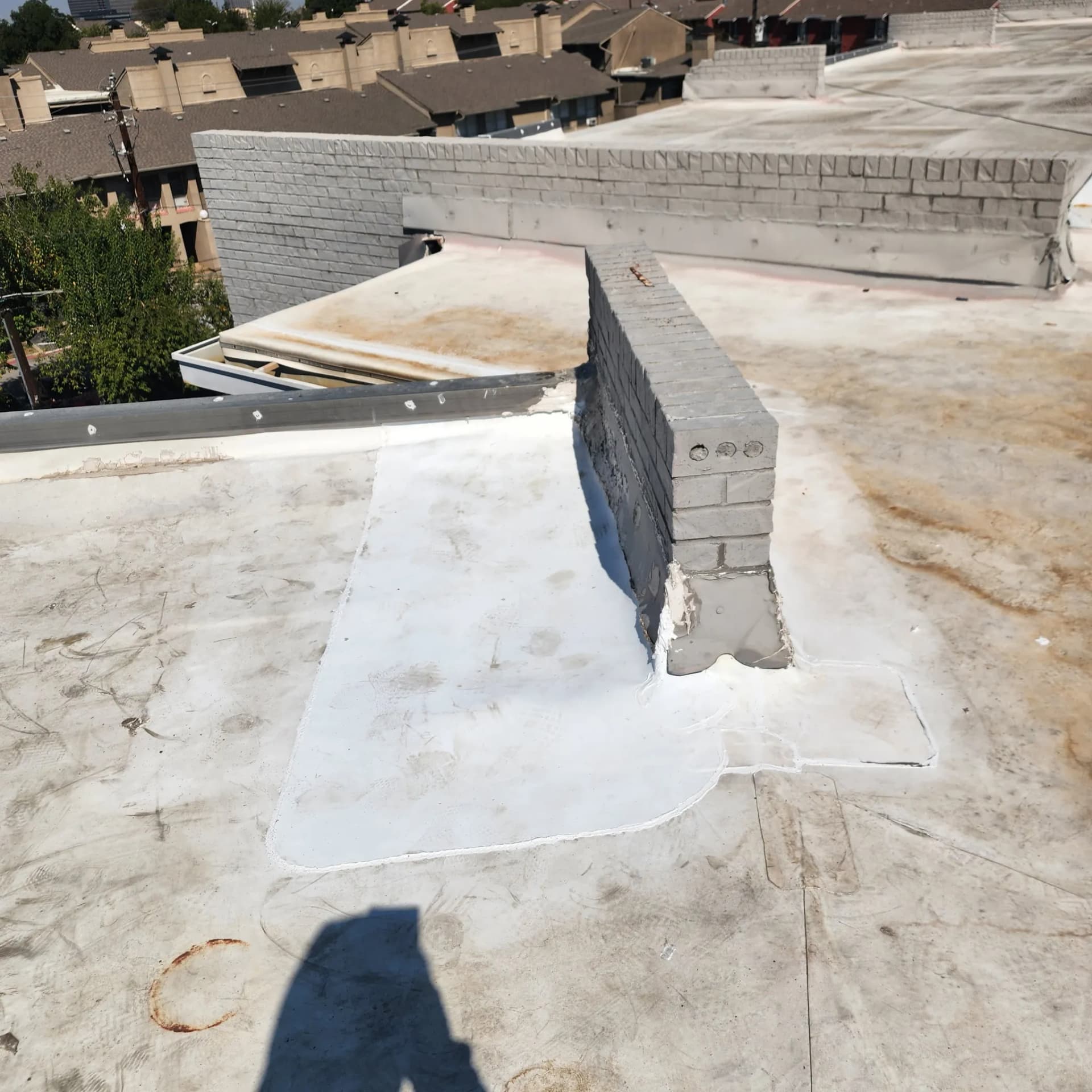
Small leaks on commercial roofs are sneaky. By the time water shows up on the ceiling inside, the damage above has usually been building for a while. That's exactly what we were dealing with on this TPO flat roof in Dallas.
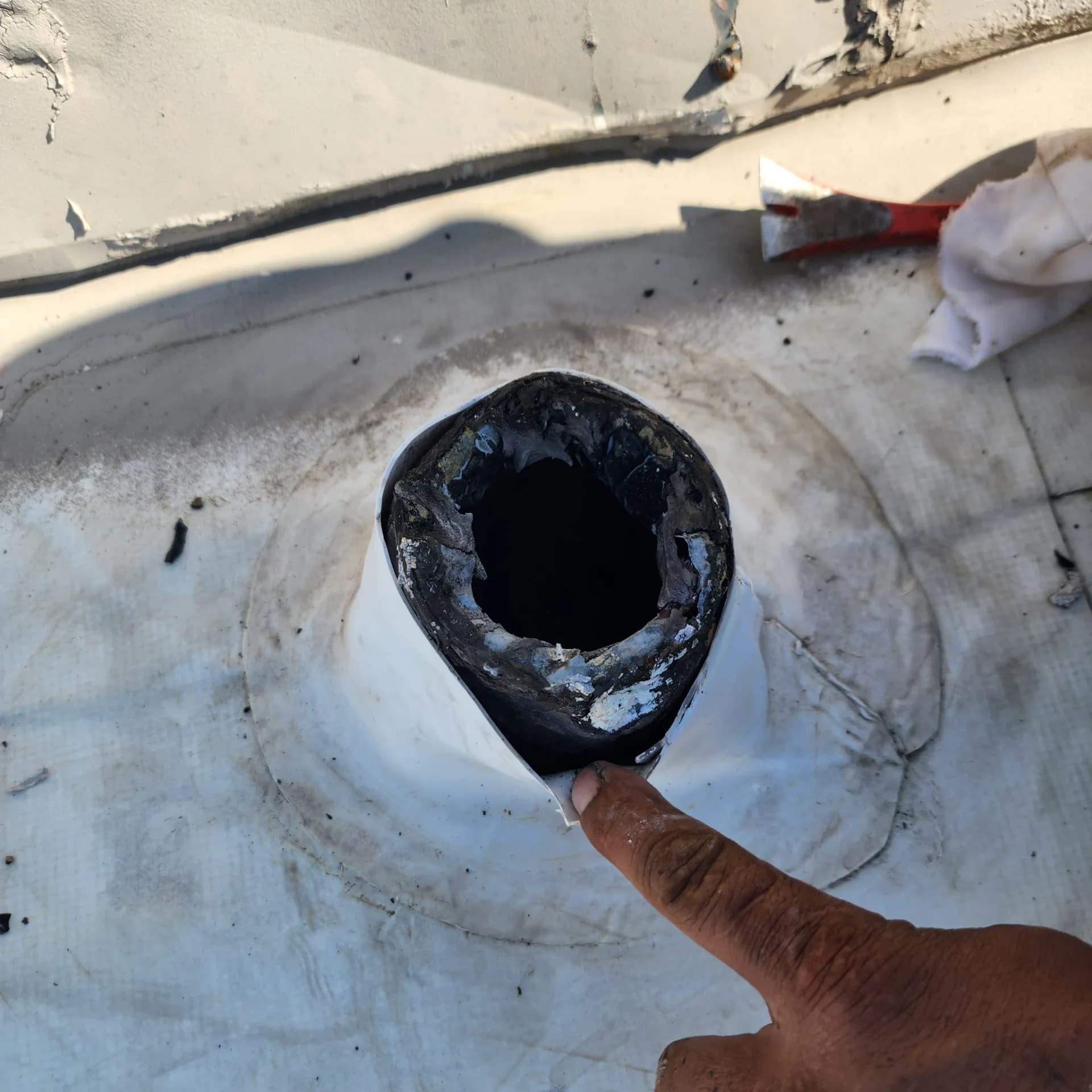
The culprit? A failed pipe boot - completely deteriorated, with the seal broken down and water finding its way straight through. On a flat roof, that kind of penetration failure doesn't fix itself. It just gets worse every time it rains. We pulled back the problem area and got a clear look at what we were working with before touching anything.
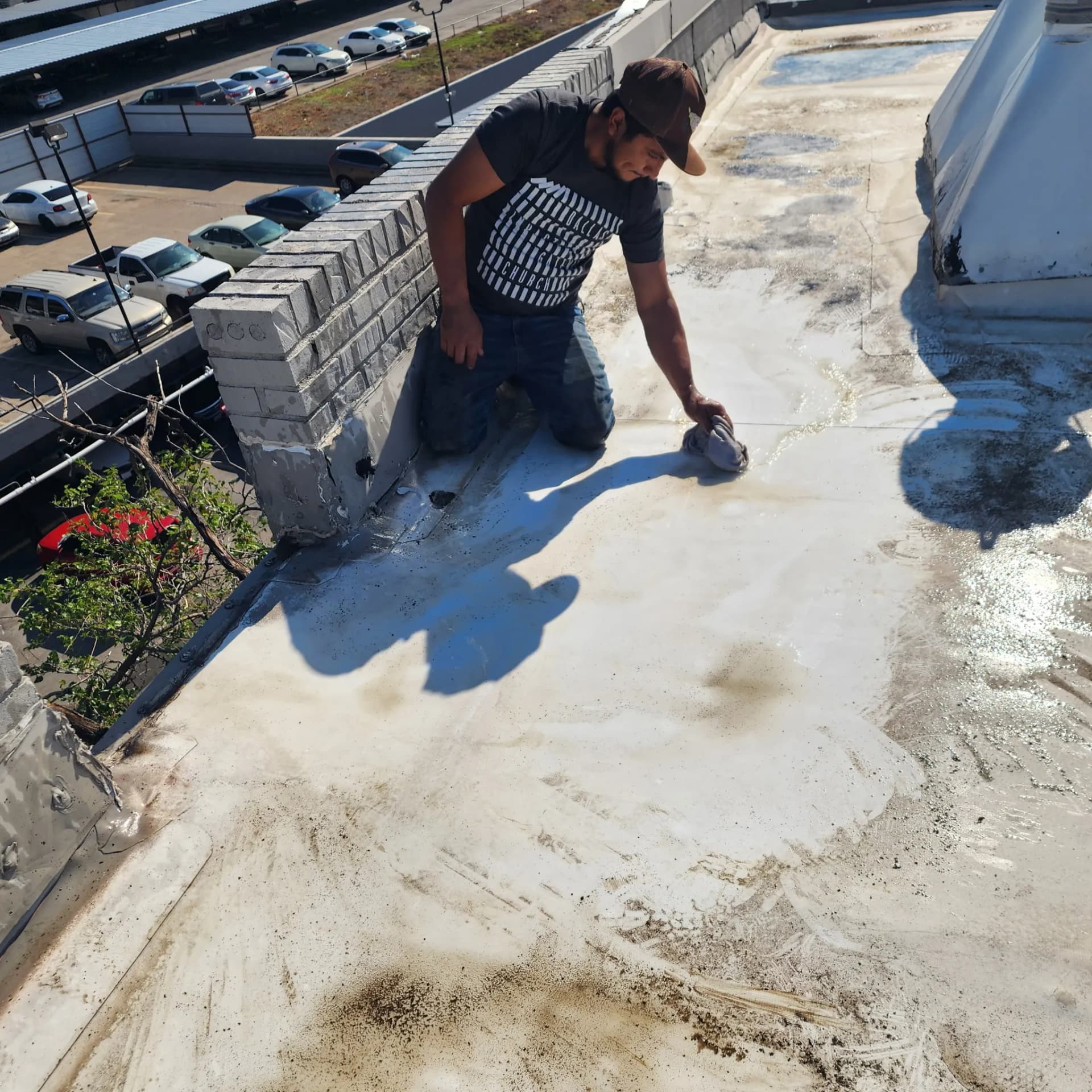
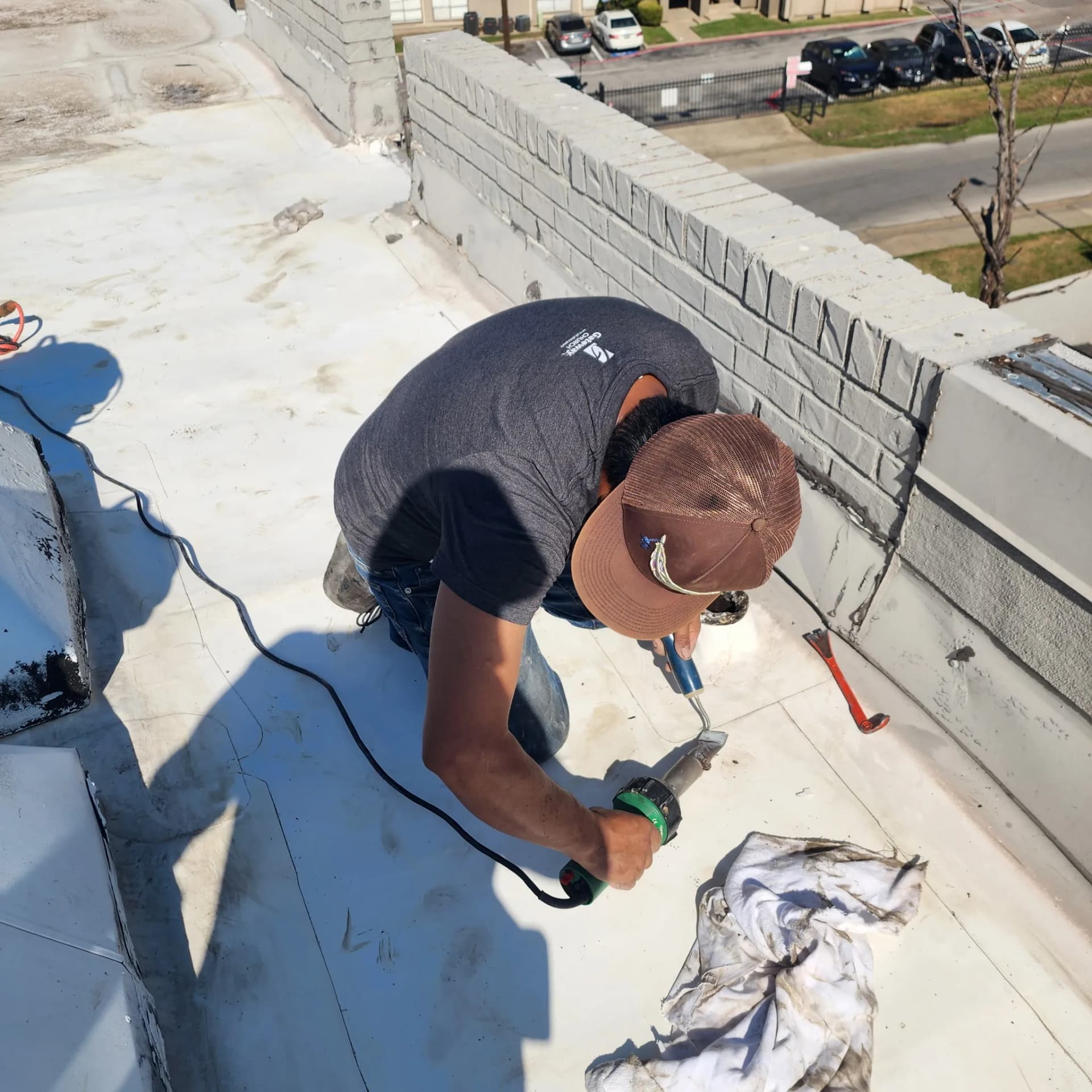
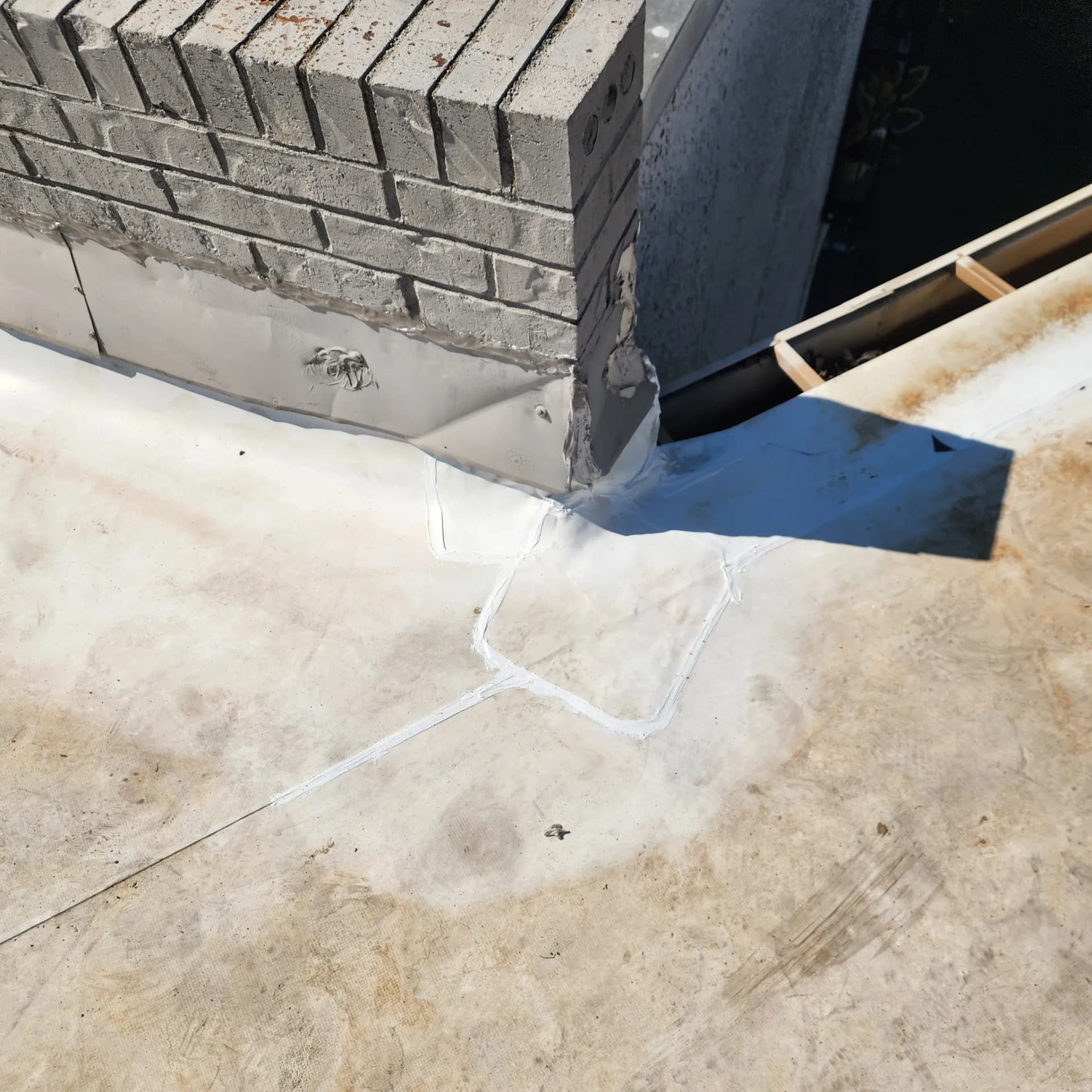
From there, it was a methodical repair. We cleaned and prepped the membrane surface around the affected areas, then used a heat welding tool to properly bond new TPO material into the existing membrane. That's not a patch-and-pray approach - heat welding fuses the material together at the seam level, which is how TPO is supposed to be repaired. We also addressed the flashing at the parapet wall corners, sealing those transition points where the roof membrane meets the vertical masonry. Those corners are notorious weak spots on flat roofs, and leaving them untreated after a leak repair would be leaving the job half done.
That's the thing about flat roof leak repair - finding the visible damage is only step one. Water travels. The entry point and the drip point are rarely the same spot. We work through the whole roof surface around a leak, not just the obvious area, to make sure we're not missing secondary failure points. That's what separates a real repair from a temporary fix.
If your commercial building has a mystery leak and nobody's been able to pinpoint it, that's a sign it needs someone who knows flat roofing systems. TPO roofs in Dallas take a beating from the heat and UV exposure, and routine roof maintenance goes a long way toward catching issues before they turn into a full repair job.